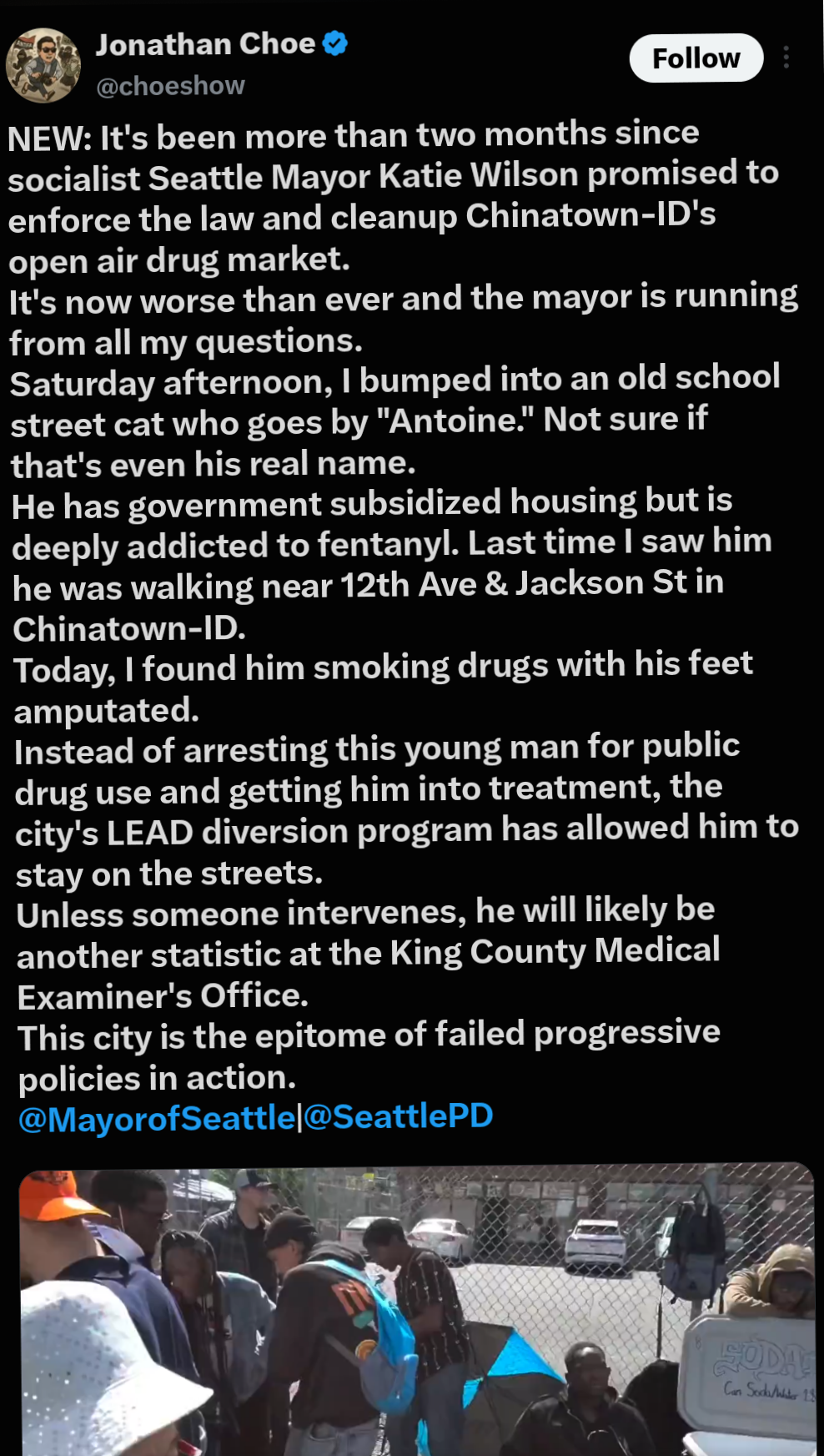
Seattle Mayor Katie Wilson promised, in a public statement posted directly to the mayor’s office website, that open-air drug sales and use at 12th and Jackson would no longer be tolerated. Police presence would expand. People engaging in the behavior would face a real choice: get booked into jail, or get enrolled in treatment through the city’s LEAD diversion program.
That was more than two months ago. According to on-the-ground reporting from journalist Jonathan Choe, the block is worse now than when the mayor made that promise — and Wilson has reportedly avoided answering direct questions about it since.
What good is a promise with no follow-up and no accountability attached to it?
Subscribe now and get 60% off a full year of Deskooled — and keep following the stories city officials would rather not answer questions about.
The reporting includes one specific case that makes the abstraction concrete. A man known on the street as Antoine has government-subsidized housing, and a severe fentanyl addiction that’s kept him living on the sidewalks of Chinatown-ID instead. He was seen weeks ago walking near 12th and Jackson. This past weekend, he was found in the same area, smoking drugs, with both feet already amputated — a complication doctors commonly associate with the circulatory damage of long-term addiction and prolonged exposure.
Under the policy the mayor herself announced, a case like this should have triggered one of two outcomes: an arrest, or enrollment in a diversion program aimed at treatment. By the reporting available, neither appears to have changed his situation. He remains on the street, using in public, with no indication that either enforcement or the diversion program has meaningfully intervened.
If a program is supposed to divert someone toward treatment, what does it mean when the same person is found in the same condition, in the same spot, months later?
That’s the deeper question raised by cases like this. A diversion program only works if diversion actually leads somewhere — into housing that addresses the addiction, into a treatment bed, into anything other than the same corner. When it doesn’t, the program isn’t an alternative to the status quo. It’s a way of documenting the status quo while calling it progress.
Wilson’s defenders would point out that two months is a short window to reverse years of entrenched conditions, that behavioral health crises this severe rarely resolve through a single policy announcement, and that abrupt crackdowns without adequate treatment infrastructure can just displace the same crisis to another block. Those are legitimate constraints on how fast any mayor could realistically move.
But the gap between the announcement and the reality is still the story: a public commitment to change, followed by reporting that shows conditions have gotten worse, not better, and a mayor who by these accounts has stopped answering questions about why.
How many more residents on that block have to watch nothing change before “we’ll have to wait and see” stops being a good-faith answer?
What happens to the next person in Antoine’s position if nothing here actually changes?
The honest answer, based on what’s been reported so far, is more of the same — until either the policy changes, or someone forces an accounting of why it hasn’t worked yet.
Subscribe now and get 60% off a full year of Deskooled — and keep the pressure on cities that make promises they don’t follow through on.